Insulating Pet Housing for Canadian Winters
A structured look at insulation methods, materials, and design details that maintain safe interior temperatures when outdoor conditions drop well below freezing — a regular occurrence across most of Canada from November through March.

The Thermal Challenge of Canadian Winters
Most of Canada experiences winters where outdoor temperatures regularly fall below -15°C and, in Prairie provinces and northern regions, below -30°C for extended periods. At those temperatures, an uninsulated outdoor shelter provides almost no thermal benefit — the interior temperature quickly approaches the exterior ambient temperature, particularly when wind is present.
Even dogs with dense winter coats adapted for cold climates — Huskies, Malamutes, and similar northern breeds — benefit from shelter that moderates temperature extremes. For shorter-coated breeds, indoor or heavily insulated housing becomes a welfare requirement rather than a comfort consideration.
The goal of insulation in a pet shelter is not to replicate indoor warmth, but to prevent the interior from reaching temperatures that cause physiological stress or harm. A shelter that holds temperature at -5°C when the exterior is -25°C represents a meaningful improvement in animal welfare even if it is not warm by human standards.
How Thermal Insulation Works in Small Structures
Heat is lost from a shelter through three mechanisms: conduction (through walls, floor, and roof), convection (through air gaps and ventilation openings), and radiation (surfaces radiating heat outward). Effective insulation addresses all three.
Insulation materials are rated by R-value — a measure of resistance to conductive heat flow. Higher R-values indicate better insulation. For a small pet shelter in a climate with sustained sub-zero winters, wall insulation in the R-10 to R-20 range provides meaningful temperature stabilization without requiring complex construction.
Common Insulation Materials for Pet Shelters
Extruded Polystyrene (XPS) Rigid Foam
XPS foam boards, sold under brand names including Styrofoam (Dow Chemical) and Foamular (Owens Corning), are among the most practical insulation options for small pet shelter construction. They are available at most Canadian building supply retailers in thicknesses from 13 mm to 100 mm.
XPS provides approximately R-5 per 25 mm of thickness. Two layers of 50 mm board achieve approximately R-20, which is sufficient for most Canadian winter conditions. The material is moisture-resistant, dimensionally stable, and lightweight.
XPS must be protected from animal contact. Pets that chew foam panels will ingest material that is not digestible. Interior cladding with plywood, oriented strand board (OSB), or hardboard prevents direct access to insulation.
Expanded Polystyrene (EPS)
EPS (beadboard) is less moisture-resistant than XPS but less expensive and more widely available. It provides approximately R-3.8 to R-4 per 25 mm. For locations where the insulation will be protected from moisture by vapor barriers and interior cladding, EPS is a cost-effective option.
Mineral Wool (Rock Wool) Batts
Mineral wool batts are non-combustible, resistant to moisture, and provide approximately R-4 per 25 mm. They require containment between structural framing members and interior cladding. Unlike foam boards, mineral wool does not deform under the loads typical of small shelters.
Mineral wool is not attractive to rodents, which sometimes nest in EPS in rural areas. This can be a relevant consideration for pet shelters in agricultural settings.
Spray Polyurethane Foam (SPF)
Closed-cell spray foam provides high R-values (approximately R-6 to R-7 per 25 mm) and seals air gaps simultaneously. It requires specialized application equipment and is typically used in larger construction projects. For small pet shelters, the cost per square meter is higher than rigid board insulation.
Open-cell spray foam is not moisture-resistant and is not suitable for shelters where interior humidity from animal respiration and water sources is expected.
R-Value Reference
XPS 50mm: ~R-10
XPS 100mm: ~R-20
EPS 50mm: ~R-7.5
Mineral wool 89mm: ~R-14
Closed-cell SPF 50mm: ~R-30
Canadian Winter Temperature Ranges
Vancouver: avg Jan low -1°C
Calgary: avg Jan low -14°C
Winnipeg: avg Jan low -22°C
Toronto: avg Jan low -8°C
Yellowknife: avg Jan low -31°C
Floor Insulation
Heat loss through the floor of a shelter is often underestimated. Ground temperature in permafrost-affected soils can remain below 0°C year-round. In areas with seasonal frost, the ground surface reaches freezing temperature in November or December and does not warm significantly until spring.
Elevating the shelter floor 10–15 cm off the ground on pressure-treated support posts allows an insulating air gap and prevents direct thermal contact with frozen ground. A layer of rigid insulation below the floor deck (between the joists or below the plywood subfloor) adds significant thermal resistance without substantially increasing construction complexity.
Straw bedding inside the shelter is a traditional method for floor insulation in rural applications. It provides thermal resistance and allows animals to burrow and create a microclimate. Straw must be replaced regularly as it absorbs moisture from animal respiration, snow tracked inside, and spilled water.
Ventilation and Condensation Management
A sealed, unventilated shelter will accumulate moisture from animal respiration and body heat. In cold conditions, this moisture condenses on interior surfaces and the insulation system. Persistent moisture degrades insulation effectiveness and promotes mold growth in wood-framed structures.
Small, controlled ventilation — typically a screened vent near the roof peak — allows moist air to exit while limiting the introduction of cold outside air. The vent area should be small enough not to negate the insulation benefit, but adequate to prevent moisture accumulation over a period of days.
Vapor barriers on the warm side of insulation (between the insulation and the interior cladding) prevent moisture-laden interior air from migrating into the insulation. Polyethylene sheeting of 6 mil thickness is the standard vapor barrier used in Canadian residential construction and is appropriate for this application.
Entry Design for Heat Retention
The entry of an outdoor shelter is the primary path for cold air infiltration. Several design approaches reduce heat loss through the opening:
- Offset entry: An interior baffle or wall that forces air to change direction before reaching the main sleeping area prevents direct wind penetration.
- Flexible flap: A heavy rubber or canvas flap over the entry opening allows animals to push through while blocking wind when the entry is not in use. Materials must remain flexible at low temperatures — standard rubber strips become rigid at -20°C.
- Entry orientation: Orienting the entry to face south or southeast (away from prevailing westerly and northerly winds in most Canadian locations) reduces wind-driven cold air entry.
- Entry sizing: The opening should be just large enough for the animal to enter comfortably. An oversized entry loses significantly more heat than a properly sized one.
Heating Supplement Options
For situations where passive insulation is insufficient — particularly for animals that are not cold-adapted, or for extreme northern conditions — supplemental heating can be considered. This article notes the options without providing specific product recommendations:
- Low-wattage flat-panel infrared heaters designed for pet shelters operate on 120V household current and can be mounted to interior walls above the animal's reach.
- Heated pet mats and self-warming beds (using reflective materials rather than powered heating) provide localized warmth at the sleeping surface without electrical risk.
- Radiant heat cables embedded in or below the floor (similar to those used to prevent roof ice dams) can prevent floor surfaces from reaching damaging cold temperatures.
Any electrically powered heating element in an outdoor pet shelter requires weatherproofing, GFCI circuit protection, and protection from chewing or contact with the animal. Provincial electrical codes apply to the installation of fixed electrical equipment in outbuildings.
Seasonal Maintenance of Insulated Shelters
Insulated shelters require inspection at the start and end of each winter season. Key items to check include:
- Integrity of interior cladding that protects insulation from animal access
- Condition of entry flaps — rubber degrades over multiple freeze-thaw cycles
- Signs of moisture infiltration at joints, corners, and around any vents
- Condition of floor insulation and subfloor — areas where moisture has penetrated may show staining or softening
- Security of elevated floor supports against frost heave, which can shift structures over winter
Related Articles

Choosing the Right Kennel Material for Canadian Conditions
Cedar, pine, polypropylene, and galvanized steel compared for outdoor kennel construction across Canada's climate zones.
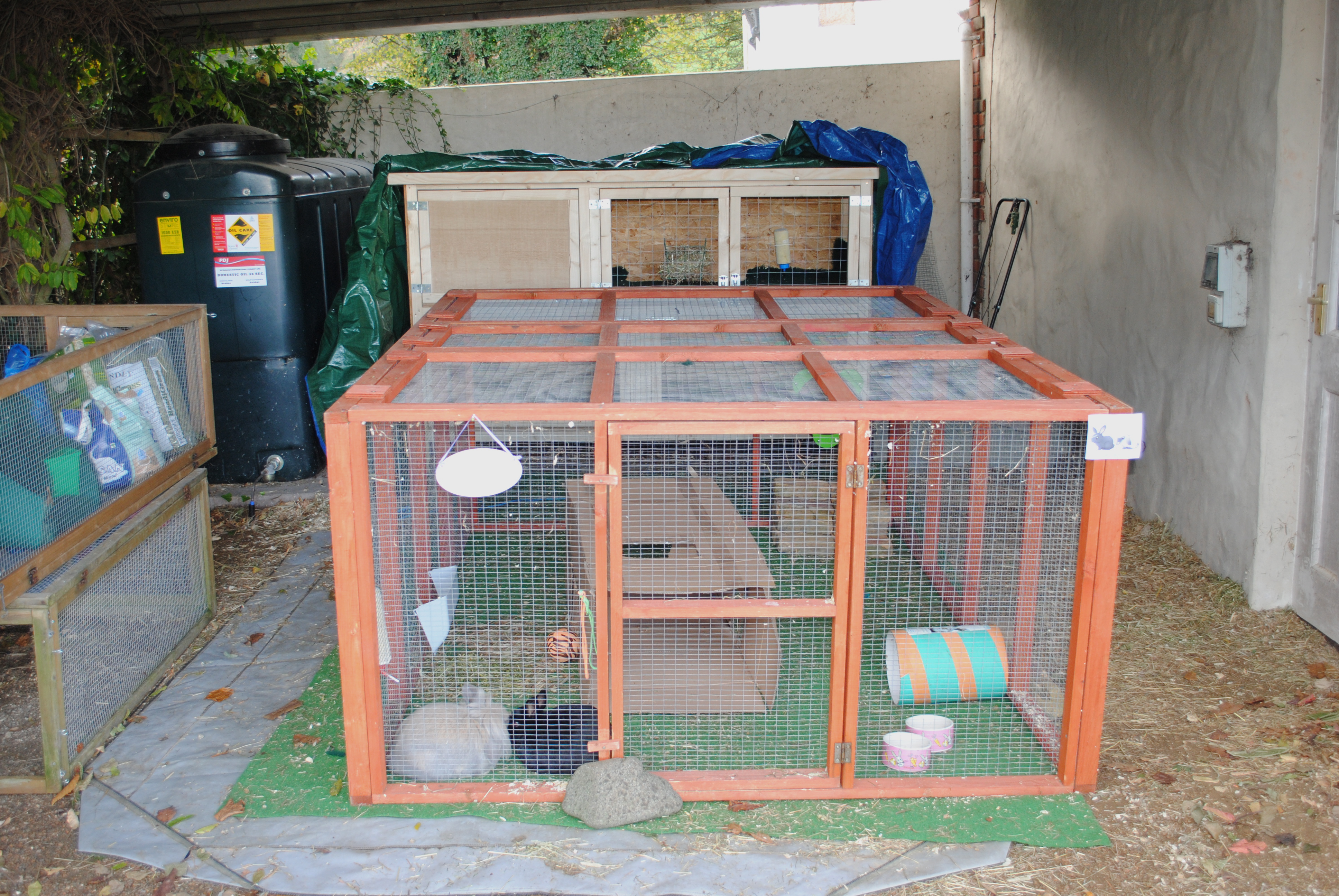
Small Animal Shelter Design: Rabbits and Guinea Pigs
Hutch sizing, flooring, and predator protection for small animals in Canadian outdoor conditions.