Small Animal Shelter Design: Rabbits and Guinea Pigs
Hutch sizing, flooring material, predator protection, and seasonal weatherproofing for rabbits and guinea pigs kept outdoors or in unheated outbuildings — with attention to the cold-weather limitations specific to Canadian conditions.
Cold Tolerance: Rabbits vs. Guinea Pigs
Before discussing shelter construction, the significant difference in cold tolerance between these two species is relevant to housing decisions in Canada.
Domestic rabbits descended from European wild rabbits (Oryctolagus cuniculus) retain reasonable cold tolerance when acclimated gradually to lower temperatures. Adult rabbits in good health, with appropriate bedding and a draft-free shelter, can tolerate temperatures several degrees below zero for short periods. However, sustained temperatures below -10°C present a risk of hypothermia, particularly for young, old, or unwell animals.
Guinea pigs (Cavia porcellus), native to the South American Andes, are significantly less cold-tolerant. Most animal welfare organizations recommend that guinea pigs not be kept in environments below approximately 15°C for extended periods. This effectively excludes outdoor housing in most of Canada for six or more months of the year without active heating. The Ontario SPCA and other provincial organizations have issued guidance consistent with this temperature threshold.
For Canadian conditions, guinea pigs are typically appropriate for outdoor housing only from late May through early September in temperate southern regions, and they should be moved indoors or to a heated space outside those windows.
Hutch Sizing Standards
Hutch size recommendations have evolved in recent years as animal welfare research has placed greater emphasis on space for natural behaviors — stretching, hopping, and foraging — rather than minimum cage dimensions from earlier decades.
Rabbits
Current guidance from organizations including the RSPCA (United Kingdom) and aligned Canadian welfare bodies recommends hutches with a minimum footprint of approximately 180 cm × 60 cm (6 ft × 2 ft) for a single average-sized rabbit, with height sufficient to allow the rabbit to stand fully upright on its rear legs — typically a minimum of 60 cm.
These dimensions represent a minimum for sedentary housing. If the hutch does not connect to a run, the minimum footprint should be considerably larger. Rabbits that cannot exercise adequately develop skeletal and behavioral problems over time.
For multiple rabbits housed together, adding approximately 40–50% to the footprint per additional animal is a commonly cited guideline, though individual animals' compatibility and size also factor into this.
Guinea Pigs
Guinea pigs are social animals and are typically housed in groups of two or more. A pair of guinea pigs requires a minimum footprint of approximately 120 cm × 60 cm (4 ft × 2 ft), with larger areas recommended for active or multiple animals.
Height is less critical for guinea pigs than for rabbits, as they do not rear up on their hind legs in the same way. However, adequate internal volume contributes to air quality in enclosed structures.
Rabbit Hutch Minimums
Length: 180 cm (6 ft)
Width: 60 cm (2 ft)
Height: 60 cm (2 ft)
For 2 rabbits: add ~50% floor area
Run: recommended as attached space
Guinea Pig Housing Minimums
Length: 120 cm (4 ft)
Width: 60 cm (2 ft)
For 2–3 animals (typical group)
Temperature: minimum ~15°C
Outdoor use: summer months only in most of Canada
Flooring Considerations
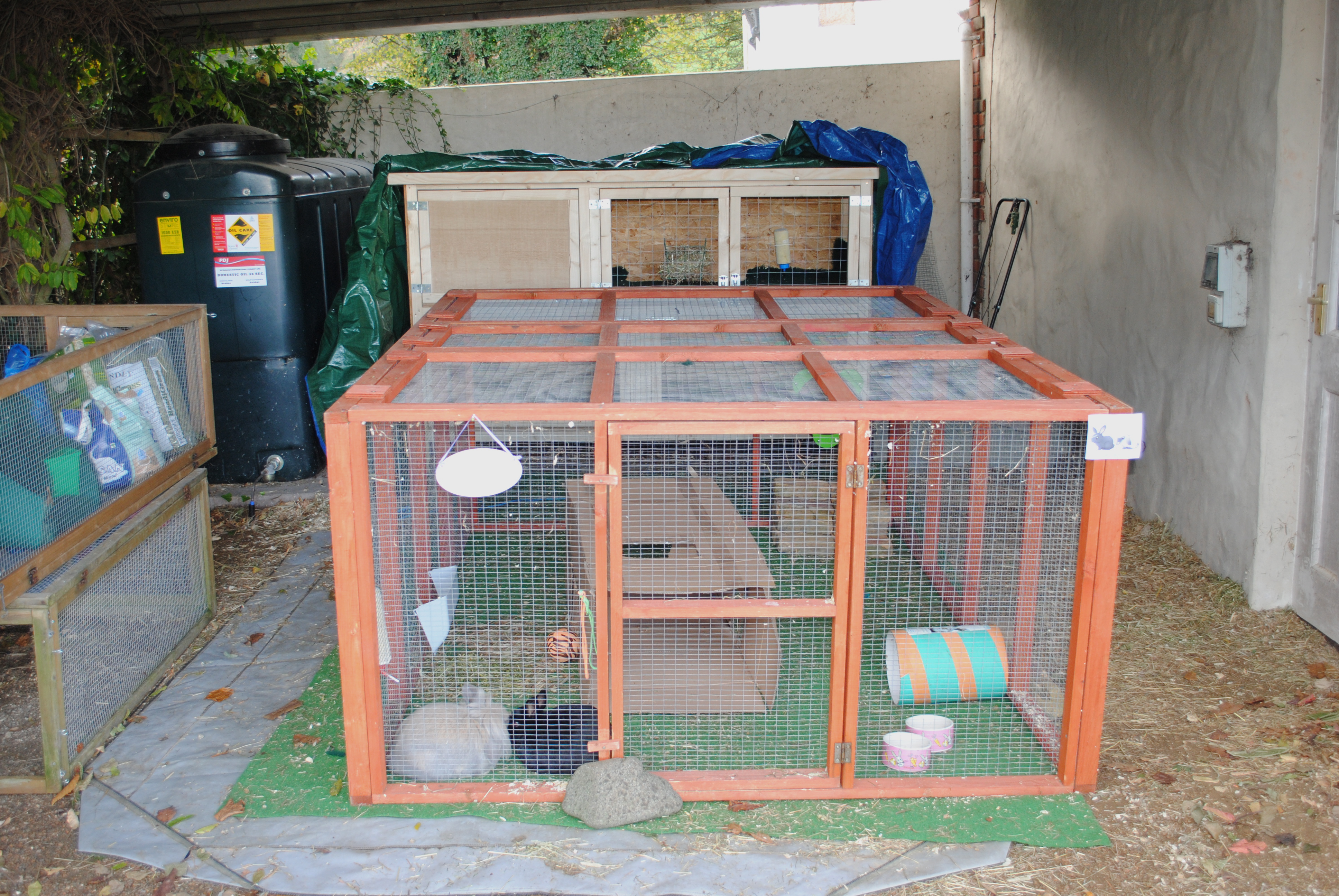
Hutch flooring has a direct impact on animal health. Wire mesh floors, while common in mass-produced hutches, can cause pressure sores (pododermatitis) on rabbit and guinea pig feet over time, particularly in heavier animals or those with dense fur that collects moisture and debris. Solid wood or composite flooring with adequate bedding is generally preferable for the main housing area.
Wire mesh flooring in run sections (outdoor exercise areas attached to the hutch) is acceptable as a short-term surface, and it allows droppings to fall through, reducing cleaning frequency. However, animals should have access to a solid-floor area at all times.
For outdoor hutches, the floor should be elevated off the ground. This serves two purposes: it prevents ground moisture from wicking into the floor structure, and it maintains a thermal air gap in cold weather that reduces heat loss through the floor. Elevation of 15–20 cm on treated timber legs is common.
Predator Protection
Canadian wildlife presents substantial predation risk for outdoor small animal housing. Relevant species in most populated areas include raccoons, foxes, coyotes, and domestic cats. In rural areas, mink, weasels, fisher cats, and hawks present additional threats.
Key design principles for predator resistance:
- Wire gauge: Standard chicken wire (hexagonal mesh) is insufficient against determined predators. 16-gauge galvanized welded wire with openings no larger than 1 cm × 1 cm is more resistant to penetration by weasels and mink, which can squeeze through or bite through finer wire.
- Door latches: Raccoons can operate simple slide-bolt latches. Two-step latches, carabiner clips, or padlocks on hutch doors prevent raccoon access.
- Wire on all surfaces: If the hutch is elevated, the underside of the elevated floor area should be covered with welded wire to prevent animals from digging or reaching up into the hutch from below.
- Solid enclosure at night: Many owners secure rabbits in the fully enclosed section of the hutch (not the wire run) overnight, when predator activity is highest.
- Apron wire: For ground-level runs, burying wire mesh horizontally at the base of the run perimeter (an L-shaped apron extending 30–40 cm outward at the base) prevents digging entry.
Weatherproofing for Canadian Seasons
Winter
As noted, guinea pigs require heated indoor housing during Canadian winters. For rabbits that remain in outdoor or outbuilding housing through winter, several modifications improve thermal performance:
- Adding insulation panels (rigid foam covered with plywood) to the interior walls of the enclosed sleeping area, keeping walls facing north and west as the priority.
- Covering wire mesh sections of the hutch exterior with clear polycarbonate sheeting, which blocks wind and precipitation while allowing light transmission. This is removable for summer ventilation.
- Providing deep straw bedding in the sleeping area — a minimum of 10–15 cm depth. Straw (not hay, which gets wet and moldy more quickly) provides effective thermal insulation and allows rabbits to burrow.
- Raising the hutch entrance opening direction away from prevailing wind. In most of Canada, prevailing winter winds come from the north and west.
Summer
Heat stress is also a concern for rabbits in Canadian summers, particularly in southern Ontario and BC's Interior regions. Rabbits have limited ability to dissipate heat and can experience heat stroke at temperatures above 28–30°C.
- Positioning the hutch in a shaded location, avoiding prolonged direct afternoon sun exposure on the main enclosed area.
- Ensuring adequate ventilation — removing or opening winter weatherproofing panels and replacing them with mesh for maximum airflow.
- Providing frozen water bottles or ceramic tiles inside the hutch, which rabbits can lie against to lower their body temperature.
Autumn and Spring
Freeze-thaw cycles in shoulder seasons can cause moisture problems in wood-framed hutches. Water that enters cracks in the wood expands when it freezes, widening joints and accelerating structural deterioration. Applying a water-resistant sealant to exterior wood surfaces annually, particularly around joints and the roof junction, extends the hutch's service life.
Roof Design
Hutch roofs in Canada must accommodate both rainfall and snow load. Flat or low-slope roofs accumulate snow, which adds weight and introduces moisture at seams. A pitched roof with a minimum slope of 1:4 (rise to run) allows snow to shed and reduces moisture infiltration at the ridge.
Asphalt shingles, sheet metal roofing, and corrugated polycarbonate are all used on outdoor hutch roofs. The roof overhang should extend at least 5–10 cm beyond the hutch walls on all sides to direct water away from the wall joints and base.
Cleaning and Maintenance Schedule
Small animal hutches require more frequent cleaning than larger animal shelters because the volume is smaller relative to the animal's waste output. A basic schedule for an outdoor hutch in active use:
| Task | Frequency |
|---|---|
| Remove wet or soiled bedding | Daily |
| Clean food and water containers | Daily |
| Spot-clean litter corner | Every 2–3 days |
| Full bedding replacement | Weekly |
| Scrub interior surfaces | Monthly |
| Inspect and treat exterior wood | Annually |
Related Articles

Choosing the Right Kennel Material for Canadian Conditions
Cedar, pine, polypropylene, and galvanized steel compared for kennel construction across Canada.

Insulating Pet Housing for Canadian Winters
Insulation methods and design details for maintaining safe interior temperatures in severe Canadian cold.